
×
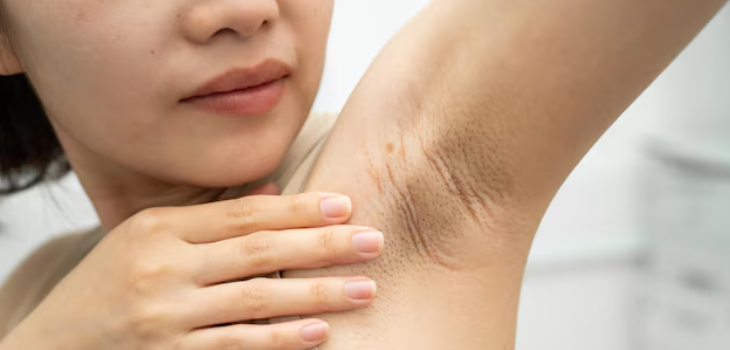
Typically, patches of a darker and velvety texture in many people, especially around the neck, armpit, or thigh area, are quite misleading and alarming. This gets worse where the skin patches do not easily disappear even after trying different skincare practices. Mostly, many people take it for dirt and a resultant effect of skin pigmentation. On a contrary and factual basis, it may be Pseudoacanthosis Nigricans.
At Estique Clinic, we educate our patients on actual causative factors for Pseudoacanthosis Nigricans because most people don’t understand the condition. And then, we implement safe and medically supervised treatments for correction rather than concealment.
Pseudoacanthosis Nigricans, under the direction of Dr. Neha Sharma, is medically and skin-therapeutically managed at Estique Clinic.
Pseudoacanthosis Nigricans is a condition that causes parts of the body to become thickened, velvety, darkened skin. This occurs most commonly in armpits, neck, groin, elbows, knees, among others. Though it resembles a condition known as Acanthosis Nigricans, it is differentiated by the factor that in most cases, the former is related to a medical condition but to external causes.
It is often associated with:
The condition is not harmful in itself, but it is a crucial warning symptom that the skin barrier and metabolism are under duress.
Pseudoacanthosis Nigricans appears slowly and usually presents first as what resembles “dirty” skin when the skin actually is clean.
How It Typically Looks:
Common areas affected are:
In contrast to infections, the onset of pseudoacanthosis will not be accompanied by the discharge of pus.
Knowing the cause is paramount because the management or treatment involves reversal and not just short-term fixing.
Commonly identified causes may include:
At Estique Clinic, identifying these triggers is the first step toward effective treatment.
Pseudoacanthosis Nigricans is more commonly seen in:
It can affect both men and women and is increasingly seen in younger age groups.
Treatment is always personalised, depending on the severity and underlying trigger.
Early treatment prevents the skin from becoming permanently dark and thickened.
The cost depends on severity, area involved, and treatment combination.
Average Cost Range
₹3,000 – ₹6,000 per session
Factors That Affect Cost
During consultation, Dr. Neha Sharma provides a transparent treatment plan and cost estimate.
Consistency plays a major role in preventing recurrence.

No, it is not harmful. Though it is a sign of imbalance in metabolism or lifestyle.
Yes, with appropriate treatment and modification of lifestyle changes, considerable improvement and control are possible.
It may be linked to insulin resistance, but it does not always mean diabetes.
Home remedies rarely help and may worsen irritation. Medical treatment is often the recommended procedure.
Most patients see improvement within 3–6 sessions, depending on severity.
Estique Clinic offers dermatologist-led diagnosis, advanced treatments, and personalised care under Dr. Neha Sharma.




Experience Exceptional Skin Care From Our Best Skin Doctor In Gurgaon
Clinic Timings
Monday to Friday : 10 AM to 7 PM
Saturday : 10 AM till 6:30 PM
12, first floor, Palm Springs Plaza, Golf Course Rd, DLF Phase 5, Sector 54, Gurugram, Haryana 122009
1021/1022, Behind 32nd Avenue, Sector 15 part 2, Gurugram, Haryana 122001
Medical and Cosmetic Dermatologist and well renowned as the Best Dermatologist in Gurgaon, has formerly practised in prestigious Hospitals such as VMMC & Safdarjung Hospital (New Delhi) and All India Institute of Medical Sciences (AIIMS, New Delhi).
It just takes a few minutes to book a visit online.
We at Estique clinic believe in understanding your problems and then suggest the treatment for best results.
Copyright 2017-2026© Estique Skin And Hair Clinic. Privacy Policy