
×
 July 28, 2026
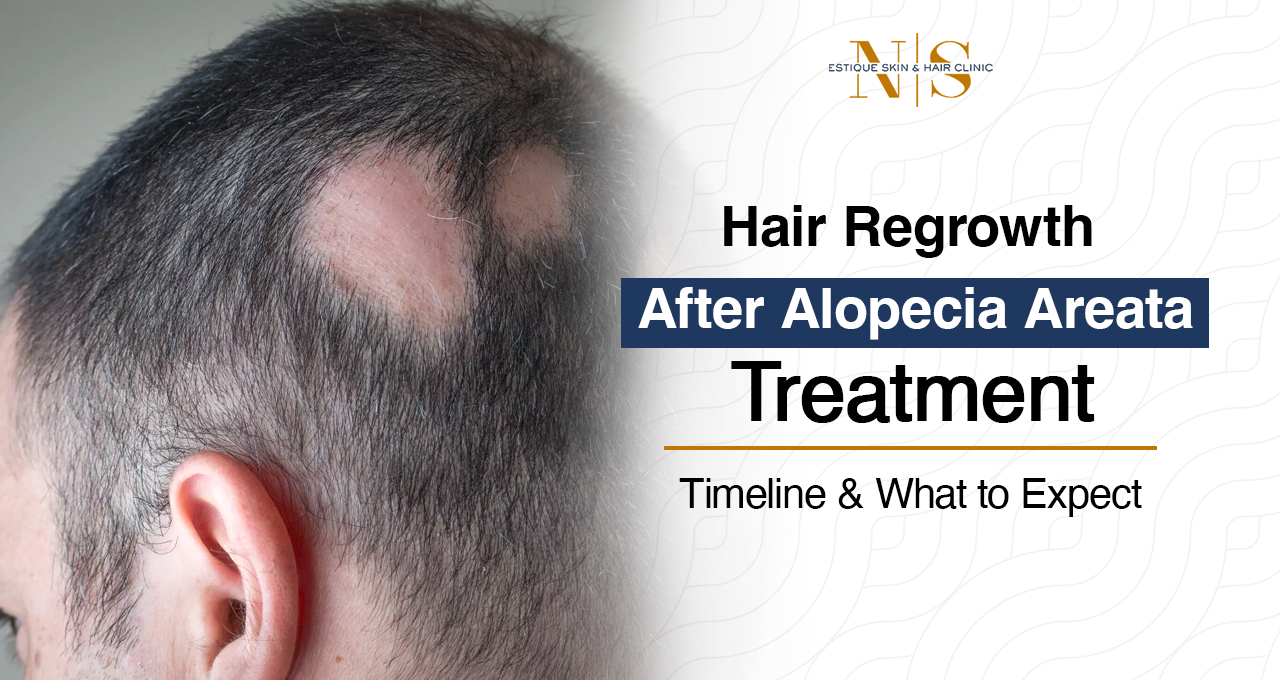
Suddenly noticing one or more round bald patches on your scalp can be worrying. Unlike regular hair fall, alopecia areata is an autoimmune condition in which the immune system mistakenly attacks healthy hair follicles.
The condition may affect the scalp, beard, eyebrows, eyelashes, or other areas of the body. It often develops without warning, and its course can be unpredictable.
Alopecia areata does not usually destroy the hair follicles permanently. Hair may regrow naturally in some cases. In others, medical treatment may be needed to reduce inflammation and encourage regrowth.
At Estique Clinic Gurgaon, Dr. Neha Sharma provides personalised treatment plans based on the location, severity, duration, and extent of hair loss. Treatment may also include guidance on lifestyle, stress, diet, nutrition, and overall health.
Alopecia areata is an autoimmune condition in which the immune system mistakenly attacks healthy hair follicles. This causes sudden hair loss, usually in small, round patches.
The condition commonly affects the scalp but may also cause hair loss in the beard, eyebrows, eyelashes, or other parts of the body. In more severe cases, it may lead to complete hair loss on the scalp or across the body.
Alopecia areata does not usually damage a person’s general physical health. Hair may regrow naturally in some cases, although the condition can be unpredictable. Hair may grow back in one area while new patches develop elsewhere.
The exact cause of alopecia areata is not fully understood. Factors associated with the condition include:
Stress may act as a trigger in some people, but it is not always the direct cause of the condition.
Common symptoms of alopecia areata include:
The amount and pattern of hair loss can vary from person to person.
Because several conditions may cause patchy hair loss, a proper examination by a dermatologist is important before beginning treatment.
Hair regrowth from alopecia areata usually takes time. There is no fixed week-wise timeline that applies to every patient.
Some people may notice early regrowth, while others may take longer to respond. Hair may also grow back in one area while new patches appear elsewhere.
Results may vary depending on:
New hair may initially appear fine, soft, or lighter in colour. It may gradually become thicker and darker. However, the pattern of regrowth differs for every person.
Treatment may encourage regrowth, but it cannot always prevent future episodes of hair loss.
Treatment depends on the location, severity, duration, and extent of hair loss. There is no single treatment that works for every patient.
At Estique Clinic Gurgaon, Dr. Neha Sharma examines the scalp, hair, nails, medical history, and pattern of hair loss before recommending a treatment plan.
Medicines applied directly to the affected areas may be used to encourage regrowth or reduce inflammation.
These may include:
The type of topical medicine and the duration of use depend on the patient’s condition.
Small amounts of corticosteroid medicine may be injected into bald patches. These injections help reduce the immune response around the hair follicles and may support hair regrowth.
Several treatment sessions may be required. The number and frequency of sessions are decided after examining the affected areas.
Oral medicines may be considered when hair loss is extensive, progressing rapidly, or affecting multiple areas.
Some medicines work by reducing or modifying the activity of the immune system. Because these treatments may have side effects, they should only be taken under medical supervision.
The dermatologist may recommend medical tests before starting treatment and may continue monitoring the patient during treatment.
Advanced immune-based treatment, including biological medicines, may be considered in selected cases of extensive, persistent, or rapidly progressing alopecia areata.
These treatments work by targeting parts of the immune response involved in hair follicle inflammation. They are not required or suitable for every patient.
The decision to use an advanced treatment depends on:
Advanced medicines should only be used under the supervision of a qualified dermatologist. Regular medical tests and follow-up appointments may also be required.
Medical treatment is only one part of managing alopecia areata. Dr. Neha Sharma also counsels patients on lifestyle factors that may support their overall health during treatment.
Lifestyle management may include:
Lifestyle changes cannot cure alopecia areata on their own. However, they may support general health and make it easier for patients to manage the condition.
Diet and nutrition may also be reviewed as part of the patient’s overall assessment. There is no single food or diet that can cure alopecia areata.
However, poor nutrition or certain deficiencies may affect general hair health. Depending on the patient’s symptoms and medical history, the dermatologist may recommend tests for nutritional deficiencies.
The assessment may include:
Patients may be advised to follow a balanced diet containing adequate protein, vegetables, fruits, whole grains, and healthy fats.
Vitamin or mineral supplements should only be taken when a deficiency has been identified or when they have been recommended by a doctor. Taking unnecessary supplements may not improve alopecia areata and may sometimes cause unwanted effects.
Patients with ongoing digestive problems, food restrictions, or poor nutrient absorption may require additional assessment and nutritional guidance.
Alopecia areata in women may begin with one or more bald patches on the scalp. It can also affect the eyebrows, eyelashes, and larger areas of the scalp.
The condition is different from general hair thinning because it usually causes sudden and clearly defined patches of hair loss. Some women may also experience nail changes, including pitting or roughness.
Hair may regrow without treatment in some cases. In others, the condition may persist, recur, or affect new areas.
Treatment is selected after examining the pattern and severity of hair loss. It may include topical medicines, corticosteroid injections, oral medicines, or advanced immune-based treatment in selected cases.
Lifestyle counselling, stress management, and nutritional assessment may also be included when required.
Sudden or patchy hair loss should be assessed by a dermatologist. Early examination can help confirm whether the hair loss is caused by alopecia areata or another condition.
A dermatologist may examine:
Additional tests may sometimes be advised to check for:
An accurate diagnosis helps the dermatologist select an appropriate treatment and avoid unnecessary procedures.
The cost of alopecia areata treatment in Gurgaon generally depends on:
Corticosteroid injection treatment may range from ₹2,500 to ₹10,000, depending on the number and size of the affected patches.
The cost of topical medicines, oral medicines, and advanced treatments may vary. The final cost is explained after a detailed consultation and scalp assessment.
Choosing an experienced dermatologist is an important step in managing alopecia areata.
Dr. Neha Sharma at Estique Clinic Gurgaon provides diagnosis and personalised treatment plans based on the patient’s pattern of hair loss, medical history, and treatment needs.
The approach may include medical treatment, regular scalp assessment, lifestyle counselling, stress management, and guidance related to diet, nutrition, and associated health conditions.
Regular follow-up appointments allow the doctor to monitor hair loss, assess regrowth, and modify treatment when required.
There is no fixed timeline for hair regrowth. The response differs from person to person and depends on the extent of hair loss, duration of the condition, areas affected, and response to treatment.
Hair may grow back completely or partially because the hair follicles usually remain present beneath the skin. However, alopecia areata can recur, and new patches may develop later.
The best treatment depends on the severity and pattern of hair loss. Treatment may include topical medicines, corticosteroid injections, oral medicines, or advanced immune-based treatments in selected cases.
No single diet can cure alopecia areata. A balanced diet may support general hair health, while medical tests can identify nutritional deficiencies that may need treatment.
Stress may trigger or worsen alopecia areata in some people, but it is not always the direct cause. The condition is mainly linked to an abnormal immune response.
You should consult a dermatologist if you notice sudden bald patches, rapid hair loss, eyebrow or eyelash loss, beard patches, nail changes, or recurring areas of patchy hair loss.
Alopecia areata is an unpredictable autoimmune condition. Hair may regrow naturally in some people, while others may need medical treatment to control inflammation and support regrowth.
There is no fixed week-wise result that applies to every patient. Treatment response depends on the severity, duration, location, and progression of the condition.
At Estique Clinic Gurgaon, Dr. Neha Sharma provides personalised alopecia areata treatment based on a detailed medical and scalp assessment. The treatment approach may include topical medicines, corticosteroid injections, oral medicines, advanced immune-based treatment, lifestyle counselling, and nutritional guidance.


Experience Exceptional Skin Care From Our Best Skin Doctor In Gurgaon
Clinic Timings
Monday to Friday : 10 AM to 7 PM
Saturday : 10 AM till 6:30 PM
12, first floor, Palm Springs Plaza, Golf Course Rd, DLF Phase 5, Sector 54, Gurugram, Haryana 122003
1021/1022, Behind 32nd Avenue, Sector 15 part 2, Gurugram, Haryana 122001
Medical and Cosmetic Dermatologist and well renowned as the Best Dermatologist in Gurgaon, has formerly practised in prestigious Hospitals such as VMMC & Safdarjung Hospital (New Delhi) and All India Institute of Medical Sciences (AIIMS, New Delhi).
It just takes a few minutes to book a visit online.
We at Estique clinic believe in understanding your problems and then suggest the treatment for best results.
Copyright 2017-2026© Estique Skin And Hair Clinic. Privacy Policy