
×
 August 25, 2026
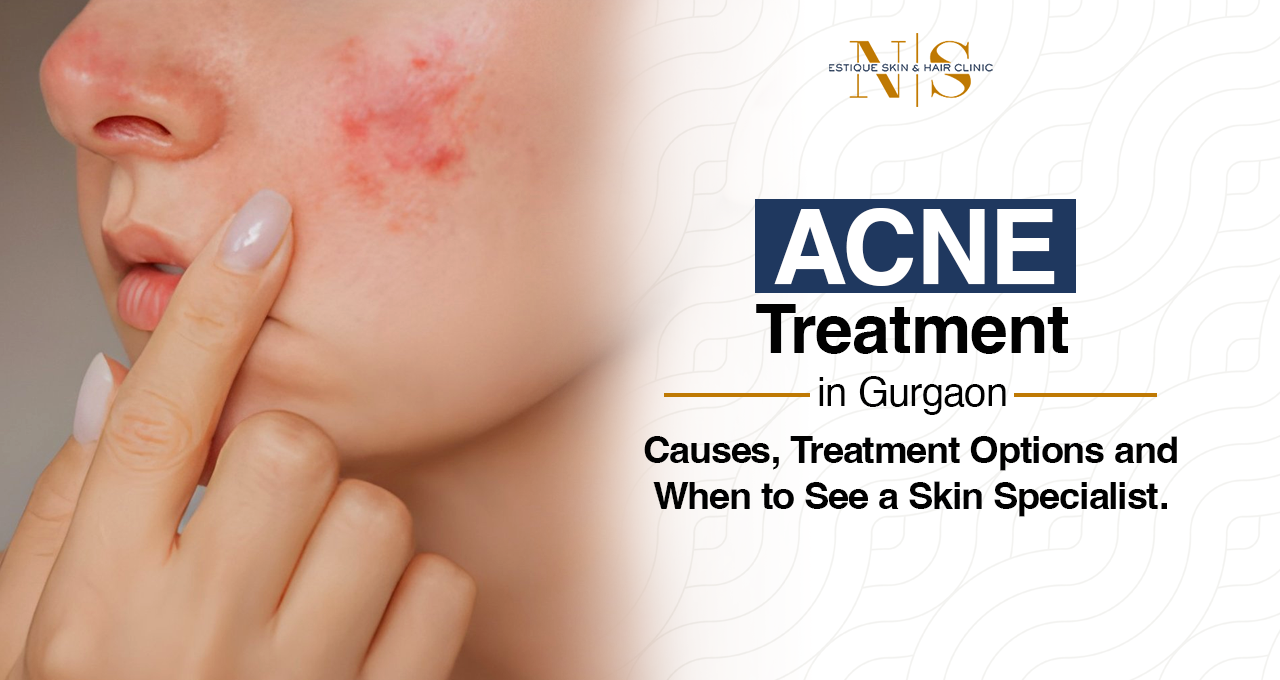
Acne treatment in Gurgaon depends on the type and severity of the breakouts. Mild acne may respond to topical medicines, while deep, painful, or scarring acne often needs dermatologist-led treatment.
Acne treatment targets the main processes that cause breakouts. This includes excess oil, blocked pores, bacterial growth, and inflammation. Depending on the severity, treatment may include topical medicines, oral medicines, or hormonal therapy to control active acne and reduce the risk of marks and scars.
Acne develops within the pilosebaceous unit. This includes the hair follicle and sebaceous gland. When excess sebum mixes with dead skin cells, the follicle can become blocked and form a comedone.
This blocked environment allows Cutibacterium acnes bacteria to multiply, which can trigger an inflammatory response and lead to red, swollen, or pus-filled pimples.
Here it is as pointers:
What happens in acne, all at once:
The oil gland makes extra oil
Dead skin cells block the pore
Bacteria multiply inside the blocked pore
The body reacts with redness and swelling
Most acne medicines work on only one of these four steps. That is why doctors often prescribe more than one at a time.
Hormone changes can increase the amount of oil the skin makes. Androgens are the main group involved, since they push the oil gland to work harder.
This is one reason acne often begins during puberty. Some women also notice repeated breakouts around their menstrual cycle or during other hormonal changes.
Products that clog pores can cause or worsen acne. Look for skincare, sunscreen, makeup, and hair products labelled non-comedogenic. This means they are less likely to block pores. Some medicines can also trigger breakouts. Steroids are the most common, along with some hormonal and psychiatric medicines.
Hair oils often cause small bumps along the forehead and hairline. Steroid creams bought without a prescription clear the skin briefly, then cause a worse flare once stopped.
Acne can range from blocked pores to deep lumps under the skin. The type matters because treatment needs can differ.
|
Acne type |
What it may look like |
Why it matters |
|
Whiteheads and blackheads |
Blocked pores |
Often treated mainly with topical medicines |
|
Papules and pustules |
Red or pus-filled pimples |
Inflammation needs to be controlled |
|
Nodules and cysts |
Deep, painful lumps |
Higher risk of lasting scars |
|
Repeated lower-face acne in women |
Often seen around the chin or jawline |
Hormonal treatment may help some patients |
Severity is judged separately from type, based on how many lesions there are, how inflamed they are, and whether scarring has started. Acne is also not limited to the face, since the chest, back, and shoulders have the same oil glands.
No. Flat marks left after acne are different from permanent scars. Post-inflammatory hyperpigmentation, or PIH, is a flat area of darker skin that can remain after a pimple clears. It usually fades with time. Some people are left with a flat red mark instead of a brown one, and mistake it for a pimple that has not cleared.
Acne scars change the texture of the skin. They may appear sunken or raised and often need different treatment. Sunken scars differ in shape. Ice pick scars are narrow and deep, boxcar scars are wider with sharp edges, and rolling scars leave a soft, uneven surface. The shape decides which procedure is chosen.
At a biological level, acne marks and scars form through different healing responses. PIH develops when inflammation stimulates excess melanin production, while flat red marks, often called post-inflammatory erythema, are linked to persistent dilation of small blood vessels after inflammation.
There is no single Best acne treatment in Gurgaon for every patient. Treatment should match the type of acne and how severe it is.
A dermatologist may use more than one medicine because acne develops through more than one process. The aim is to clear current breakouts and reduce new ones.
Different acne medicines target different parts of the condition.
|
Treatment |
How it may help |
|
Retinoids |
Help clear and prevent blocked pores |
|
Benzoyl peroxide |
Reduces acne-causing bacteria |
|
Azelaic acid |
Helps with acne and dark marks after breakouts |
|
Prescription antibiotics |
Reduce inflammation in selected cases |
|
Hormonal medicines |
May help suitable women with hormone-related acne |
|
Isotretinoin |
May be used for severe or treatment-resistant acne |
Acne medicines work over weeks, so it is better to expect results around that period only not days. Retinoids often cause dryness and peeling at first, and the skin can look worse before it improves. That settles and is not a reason to stop unless your dermatologist says so.
Oral antibiotics are usually used for a limited period. They are commonly combined with topical acne treatment rather than used alone. A short course paired with a topical medicine helps limit antibiotic resistance.
Squeezing a pimple pushes the inflammation deeper and is one of the main reasons acne leaves a scar. Hard scrubbing, over-washing and layering strong products irritate the skin without clearing it.
Hormonal acne treatment may help some women with repeated acne along the lower face or jawline.
Treatment can include certain combined oral contraceptive pills or spironolactone when medically suitable. A dermatologist needs to review the patient’s health and breakout pattern before prescribing these medicines.
Hormonal acne is closely linked to androgen activity, which can increase sebaceous gland activity and sebum production. Combined oral contraceptive pills can help lower circulating androgen effects, while spironolactone works by blocking androgen receptors in the skin.
Severe acne usually requires dermatologist-led medical treatment because deep nodules and cysts involve inflammation within the deeper layers of the skin and can damage surrounding collagen, increasing the risk of permanent scarring.
Prescription medicines may be needed to control sebum production, follicular blockage, bacterial activity, and inflammation. Isotretinoin may be considered for severe, scarring, or treatment-resistant acne because it acts on several major pathways involved in acne formation.
As it has important systemic effects and potential side effects, treatment requires careful medical assessment, dose monitoring, and regular follow-up.
It must not be taken in pregnancy, and women who could become pregnant need reliable contraception throughout. Blood tests are done before and during the course. Dry lips, skin and eyes are expected. A course runs over months, with the dose set for each patient.
See a dermatologist when acne is painful, deep, leaves scars, or not improving with regular treatment.
Medical assessment is also useful when breakouts keep returning or leave many dark marks. A dermatologist can confirm whether the bumps are acne and choose treatment according to their type.
Yes. Acne scars can be improved, but active inflammatory acne should usually be controlled before scar procedures begin. Scar treatment is selected based on the depth, shape, and underlying collagen changes in the skin.
Microneedling and radiofrequency treatments stimulate controlled dermal repair and new collagen formation, while chemical peels and laser procedures can help remodel damaged skin and improve surface texture in suitable patients.
Rolling scars suit collagen-building treatments, boxcar scars usually need resurfacing, and ice pick scars need a targeted approach. For brown skin, the risk of pigmentation is weighed before any laser is chosen.
The Best Skin Clinic in Gurgaon for acne should first identify what type of acne you have and whether it is causing marks or scars. Ask how progress will be reviewed and what happens if the treatment is not working as expected.
If you are searching for the Best Dermatologist in Gurgaon, look for clear diagnosis, evidence-based treatment, and follow-up rather than a standard acne package.
Choosing the right clinic for acne treatment involves more than addressing active breakouts. Estique by Dr. Neha Sharma follows a diagnosis-first, personalized approach to acne and acne scars, with treatment options tailored to the condition and skin concerns of each patient.
With clinics in Sector 15 and Sector 54, Gurgaon, Estique Clinic provides convenient access to dermatologist-led skin and hair care.
Estique Clinic Locations:
Sector 15: Visit Location
Sector 54: Visit Location
If you are looking for acne treatment in Gurgaon or want professional guidance for acne scars and uneven skin texture, consult the team at Estique Clinic to understand which treatment approach is appropriate for your skin.
Can stress make acne worse during acne treatment in Gurgaon?
Yes. Stress can worsen existing acne in some people. During acne treatment in Gurgaon, managing stress may help reduce one possible trigger, but stress control does not replace acne medicine.
Can diet affect acne causes and treatment?
Diet may affect acne in some people, but food is not the only cause. When discussing acne causes and treatment, some evidence suggests that a low-glycemic diet may reduce breakouts in certain patients.
What sunscreen should I use during acne treatment in Gurgaon?
Choose a non-comedogenic sunscreen during acne treatment in Gurgaon. Non-comedogenic means it is less likely to block pores.
Can acne treatment in Gurgaon help acne on the chest and back?
Yes. Acne treatment in Gurgaon can also address acne on the chest or back. Body acne may need a different product form or routine because the skin can be harder to reach.
Should I stop acne treatment when my skin becomes clear?
Not always. The Best acne treatment in Gurgaon may include maintenance treatment after active breakouts improve. Some topical retinoids can be continued to help prevent blocked pores and new acne.
Can I have acne treatment in Gurgaon during pregnancy?
Yes, but acne treatment in Gurgaon must be selected carefully during pregnancy. Some acne medicines are not suitable during this time. Tell the dermatologist if you are pregnant or planning pregnancy before starting prescription treatment so medicines can be chosen safely.
Is adult acne after 25 treated differently?
Often, yes. Adult skin is drier and irritates more easily, so strengths are adjusted. In women, a returning jawline pattern may point towards hormonal treatment rather than a stronger cream.
How long does acne treatment in Gurgaon take to show results?
Acne treatment in Gurgaon is measured in weeks. A review appointment is set so the dermatologist can judge whether the plan is working, and deep acne takes longer to settle than surface breakouts.




Experience Exceptional Skin Care From Our Best Skin Doctor In Gurgaon
Clinic Timings
Monday to Friday : 10 AM to 7 PM
Saturday : 10 AM till 6:30 PM
12, first floor, Palm Springs Plaza, Golf Course Rd, DLF Phase 5, Sector 54, Gurugram, Haryana 122003
1021/1022, Behind 32nd Avenue, Sector 15 part 2, Gurugram, Haryana 122001
Medical and Cosmetic Dermatologist and well renowned as the Best Dermatologist in Gurgaon, has formerly practised in prestigious Hospitals such as VMMC & Safdarjung Hospital (New Delhi) and All India Institute of Medical Sciences (AIIMS, New Delhi).
It just takes a few minutes to book a visit online.
We at Estique clinic believe in understanding your problems and then suggest the treatment for best results.
Copyright 2017-2026© Estique Skin And Hair Clinic. Privacy Policy