
×
 May 18, 2026
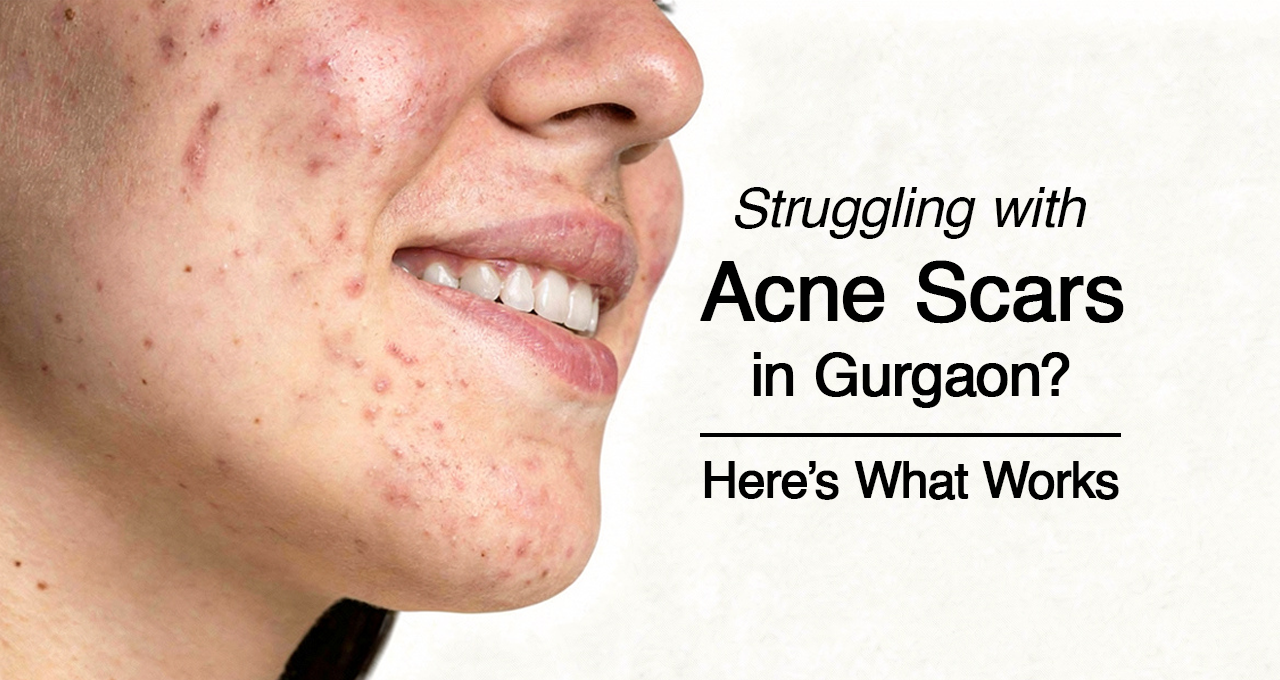
Acne may heal, but the marks and uneven texture it leaves behind can affect confidence for weeks or even months. In a city like Gurgaon, factors such as high pollution levels, intense sun exposure, heat, and humidity can further aggravate skin concerns. These environmental stressors not only trigger acne but can also slow down skin healing and worsen pigmentation, making acne scars more noticeable and persistent.
Many people try home care first, but it’s important to understand that while mild marks can improve with the right skincare, pitted acne scars often require medical treatments for significant improvement. With the right dermatological approach, it is possible to say goodbye to acne scars and achieve smoother, healthier-looking skin over time.
Acne scars form when inflammation damages deeper layers of the skin, disrupting normal collagen production. As the skin heals, it may leave behind depressions, raised areas, or uneven texture. The severity of scarring depends on factors such as the type of acne, delay in treatment, skin type, and whether the acne was picked or inflamed repeatedly.
In urban environments like Gurgaon, UV exposure and airborne pollutants can also lead to oxidative stress in the skin, which delays collagen repair and deepens pigmentation. This makes early and targeted treatment even more important for achieving smoother, clearer skin.
This guide explains effective, medically backed options—both at home and in-clinic—that help improve acne marks and scars in a structured and reliable way.
Before starting, it’s important to know what you’re treating:
Understanding this difference helps set realistic expectations and ensures you choose the right treatment approach early.
While home care won’t remove deep scars, it plays a crucial role in improving marks, maintaining skin health, and enhancing the results of in-clinic treatments. Consistency and correct product selection are key.
Help boost collagen production, improve cell turnover, and smooth early textural irregularities.
Use: Night application under dermatological guidance.
Promote controlled exfoliation, unclog pores, and fade pigmentation gradually.
Use: 2–3 times per week, based on skin tolerance.
A powerful antioxidant that brightens skin and reduces pigmentation.
Use: Morning application before sunscreen.
Improves skin barrier function, reduces redness, and evens out skin tone.
Use: Suitable for daily use.
Protects skin from UV damage, prevents marks from worsening, and supports healing.
Use: Broad-spectrum SPF 30+ daily, with reapplication when needed.
A well-structured skincare routine not only improves visible results but also prepares the skin for advanced procedures, making treatments safer and more effective.
For deeper scars and uneven texture, dermatological procedures offer targeted and long-lasting improvement. Most patients benefit from a combination approach, as different types of scars respond to different treatments. Choosing the right acne scar treatment depends on factors such as scar depth, skin type, and overall skin condition.
A minor procedure that releases fibrous bands under the skin, allowing depressed scars to lift and smoothen over time.
Creates controlled micro-injuries in the skin to stimulate collagen remodeling and improve texture and tone.
Combines microneedling with heat energy to target deeper layers of the skin, improving firmness and reducing scars.
A highly targeted technique for deep, narrow scars using a strong acid to stimulate collagen production within the scar.
Removes very deep scars surgically and replaces them with a finer, less noticeable line.
Temporarily lift depressed scars, providing immediate improvement in skin smoothness.
Uses the body’s natural healing components to accelerate tissue repair and collagen regeneration.
An advanced regenerative approach that enhances skin repair, improves texture, and supports long-term rejuvenation.
The choice of treatment depends on scar type, depth, skin type, and individual goals. Multiple sessions are often required for optimal results.
According to Dr. Neha Sharma at Estique Skin & Hair Clinic, medical-grade skincare plays a supportive role, but acne scars require targeted procedures for visible and lasting improvement.
She highlights that combining treatments—such as subcision with laser or microneedling—often delivers better outcomes than a single procedure alone. Personalized treatment planning is essential to address different scar types effectively.
She also advises avoiding delayed treatment, as older scars tend to become more resistant and require more intensive correction.
Consult a dermatologist if you notice:
Early intervention not only improves results but also reduces the number of sessions needed over time.
Acne scars are best treated with a structured, medical approach tailored to your skin type and scar pattern. While skincare helps maintain results and improve overall skin quality, in-clinic treatments are essential for deeper correction.
With the right guidance, consistency, and combination of treatments, smoother and clearer skin is an achievable goal.




Experience Exceptional Skin Care From Our Best Skin Doctor In Gurgaon
Clinic Timings
Monday to Friday : 10 AM to 7 PM
Saturday : 10 AM till 6:30 PM
12, first floor, Palm Springs Plaza, Golf Course Rd, DLF Phase 5, Sector 54, Gurugram, Haryana 122003
1021/1022, Behind 32nd Avenue, Sector 15 part 2, Gurugram, Haryana 122001

Medical and Cosmetic Dermatologist and well renowned as the Best Dermatologist in Gurgaon, has formerly practised in prestigious Hospitals such as VMMC & Safdarjung Hospital (New Delhi) and All India Institute of Medical Sciences (AIIMS, New Delhi).
It just takes a few minutes to book a visit online.
We at Estique clinic believe in understanding your problems and then suggest the treatment for best results.
Copyright 2017-2026© Estique Skin And Hair Clinic. Privacy Policy