Urticaria is a relatively common heterogeneous skin disorder that may be acute or chronic. It is difficult to determine, especially when it becomes chronic. We, Estique Clinic, have the best dermatologists in Gurgaon who can give the best treatments for Urticaria
There are two types of Urticaria to classify such as:
A. Spontaneous Urticaria – It is the most common type of urticaria The symptoms and the signs of illness will be visible such as wheals, angioedema, and itchiness. According to the duration, spontaneous urticaria classified into two types such as: –
- Acute Spontaneous urticaria – It is characterized by spontaneously according wheals for at less than 6 weeks.
- Chronic urticaria – It is characterized by spontaneously occurring wheals and itchiness for at least 2 days per week for a period of 6 weeks or more.
B. Inducible urticaria – It is also known as chronic physical urticaria which occur when triggered by specific physical stimuli.
Symptoms of Urticaria
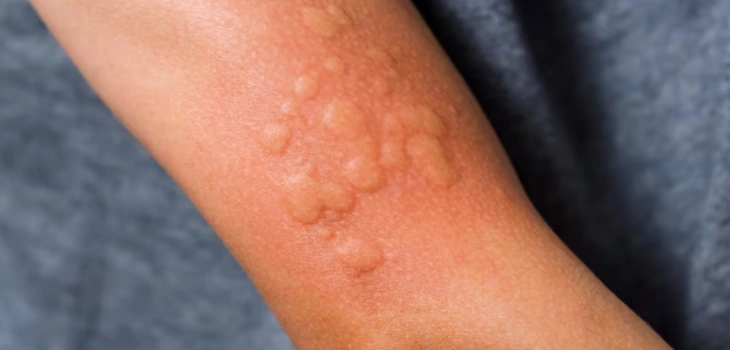
The main symptom of urticaria (hives) is the appearance of itchy welts on the skin. These welts can have various characteristics, including:
- Raised, itchy bumps: These bumps can vary in size, ranging from a small pinhead to several inches across.
- Red or skin-coloured:The welts may appear red, especially on lighter skin tones, or they can be the same colour as your skin.
- Blanching: Pressing on the center of a red welt will often cause it to turn white (blanch).
- Changing shape and disappearing: Unlike bug bites, hives tend to change shape, move around, and disappear and reappear over short periods of time, often within minutes or hours. Individual welts typically don’t last more than 24 hours.
Pruritus(Itching) is the most predominate symptom. Other characteristic signs include wheals and flares that vary in size, with individual wheals usually resolving within 24 hours without residual hyperpigmentation.
Pathogenesis: Acute or chronic urticaria may occur as a result of mast cell and basophil release of bioactive mediators, such as histamine and leukotrienes, after activation of either the innate or adaptive immune system.
Therefore, activation of mast cells by particular IgE, IgG or IgM antibody results urticaria activates the classical complement pathway. Other mediators (neuropeptides such as substance P, calcitonin gene-related peptide and neurokinin A) and medications such as opiates can also activate mast cells or basophils through specific receptors and for cyclooxygenase inhibitors (i.e., ASA, NSAIDS) to induce hives through non-IgE mediated pathways.
Treatment lies in removing the source of allergy. Since common causes of acute urticaria include infection and food allergy, investigation for these underlying causes should be guided by the history and physical examination. Detailed evaluation needs to be done for patients with chronic urticaria.
Antihistamines form the baseline for management. Newer treatment options include the usage of Oma-li-zu-mab.