
×
 October 26, 2026
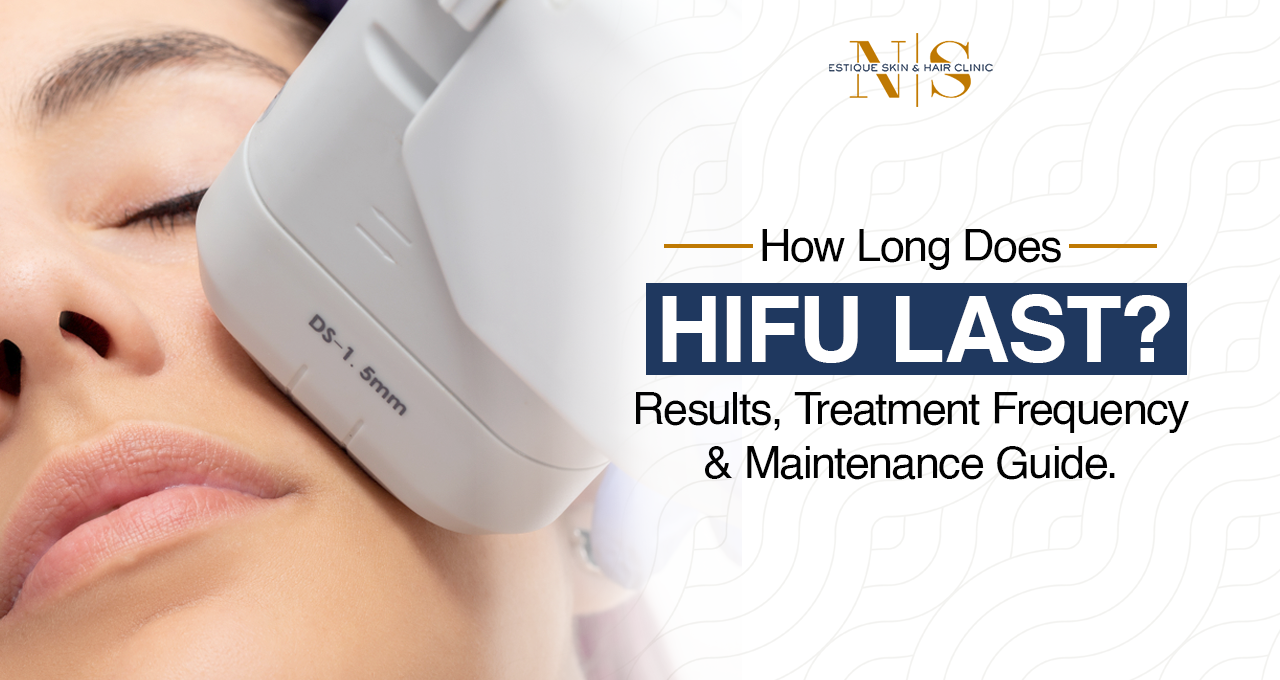
HIFU treatment is a non-surgical procedure used to improve mild to moderate skin laxity. It delivers focused ultrasound energy into selected tissue depths beneath the skin.
The energy creates controlled thermal injury. This stimulates collagen contraction, new collagen formation, and gradual tissue remodelling. Results develop over several weeks and may remain visible for months.
HIFU stands for High-Intensity Focused Ultrasound. The device delivers ultrasound energy to specific points beneath the skin. This creates small zones of heat called thermal coagulation points.
These controlled treatment points trigger the body’s repair response. Fibroblasts, the cells that produce collagen. These become active and begin forming new collagen fibres. This process is called neocollagenesis.
Existing collagen also goes through collagen remodelling. Here, the fibres reorganise and contract over time. Together, these changes can make the skin feel firmer and appear tighter.
The results of HIFU treatment can remain visible for several months. In some patients, improvement may last around 9 to 12 months. There is no fixed duration for everyone.
HIFU works by stimulating the patient’s own collagen rather than adding volume or removing loose skin. The duration therefore depends partly on how the skin produces and maintains collagen.
Natural ageing also continues after treatment. Collagen decreases over time, and changes in facial fat, skin and supporting structures continue.
HIFU results develop gradually. Some early tightening may be noticed after treatment because heat can cause immediate contraction of collagen fibres. The main changes, however, develop as new collagen forms. A general timeline may include:
The result should therefore not be judged immediately after the procedure.
The main biological effect of HIFU skin tightening treatment is controlled heating of collagen-rich tissue. The ultrasound energy produces thermal coagulation. This causes controlled protein denaturation. Protein denaturation means that the structure of collagen changes when exposed to heat.
The body then begins tissue repair. Fibroblasts produce new collagen while existing fibres reorganise. This explains why HIFU results appear gradually rather than immediately.
Different HIFU cartridges can deliver energy at different tissue depths. Depending on the device and treatment area, energy may reach deeper dermal tissue, subcutaneous tissue, or areas near the SMAS.
The SMAS, or superficial musculoaponeurotic system, is a fibromuscular layer below the skin and facial fat. It contributes to facial support. This is one reason the term HIFU facelift is often used. HIFU.
Surgery can physically remove and reposition tissue. HIFU uses heat and collagen remodelling to produce a more tightening effect without surgery.
A HIFU facial treatment may be considered for mild to moderate skin laxity in areas such as:
The area should be selected after checking skin thickness, facial anatomy, and the degree of laxity. HIFU may be less suitable for severe loose skin or when the main problem is major facial volume loss.
For concerns focused on facial laxity, HIFU for facial skin tightening can explain how treatment is planned for different areas.
For suitable patients with mild to moderate skin laxity, HIFU treatment may offer:
Results vary according to skin laxity and treatment settings. HIFU does not provide the same degree of lifting as surgery.
There is no single treatment schedule for every patient. Some people may have one session and then monitor the result over several months. Another session may be considered depending on the response and the return of skin laxity. Treatment frequency can depend on:
HIFU should not be repeated too early simply to increase the effect. Collagen remodelling continues for months after treatment.
There are several factors that can determine the HIFU results. These can include the degree of skin laxity, collagen quality, treatment depth, and much more.
HIFU is usually considered for mild to moderate laxity. Severe loose skin may need a different treatment approach.
Collagen density and fibroblast activity change with age. This can affect how strongly the skin responds.
The ultrasound energy needs to reach the intended tissue layer. Incorrect depth may change the treatment response.
The amount of energy and number of treatment lines should match the treatment area and tissue thickness.
Skin thickness, fat distribution, and deeper facial structures vary between patients. This can vary the treatment process, leading to different results.
Some patients may consider another treatment when skin laxity becomes noticeable again. The timing should depend on the initial result, the current skin condition, and whether another session will help.
Sun protection and regular skincare are also important because ultraviolet exposure contributes to collagen breakdown.
HIFU treatment cost ranges from ₹15,000 to ₹30,000 per session. The exact price depends on the treatment area, number of treatment lines, and device used.
Treating both the face and neck may cost more than treating a smaller area, such as the jawline, as it usually requires more treatment lines. The final cost is determined after assessing the skin and treatment requirements.
Estique Clinic provides HIFU as part of its skin-tightening and contouring treatments and describes it as a non-surgical face-lifting treatment.
For HIFU treatment in Gurgaon, the first step should be to assess whether skin laxity is the main concern and whether HIFU is suitable for the patient’s facial anatomy.
HIFU results can remain visible for several months and may last around 9 to 12 months in some patients. The duration varies according to age, skin laxity, and response to collagen.
Some patients may need one session, while others may require another treatment later on. This depends on the response to the first session.
The main changes usually develop over two to three months as new collagen forms and existing collagen remodels.
No. HIFU tightens tissue using focused ultrasound. A surgical facelift physically repositions or removes tissue, so the degree of correction is different.
Repeat treatment may be considered when skin laxity starts to return. The interval should depend on the patient’s skin response rather than a fixed schedule.




Experience Exceptional Skin Care From Our Best Skin Doctor In Gurgaon
Clinic Timings
Monday to Friday : 10 AM to 7 PM
Saturday : 10 AM till 6:30 PM
12, first floor, Palm Springs Plaza, Golf Course Rd, DLF Phase 5, Sector 54, Gurugram, Haryana 122003
1021/1022, Behind 32nd Avenue, Sector 15 part 2, Gurugram, Haryana 122001
Medical and Cosmetic Dermatologist and well renowned as the Best Dermatologist in Gurgaon, has formerly practised in prestigious Hospitals such as VMMC & Safdarjung Hospital (New Delhi) and All India Institute of Medical Sciences (AIIMS, New Delhi).
It just takes a few minutes to book a visit online.
We at Estique clinic believe in understanding your problems and then suggest the treatment for best results.
Copyright 2017-2026© Estique Skin And Hair Clinic. Privacy Policy