
×
 October 22, 2026
Hair thinning often starts gradually. You may notice more hair during washing, a wider parting, reduced density, or a receding hairline. The right treatment depends on why the hair is thinning and whether the hair follicles are still active.
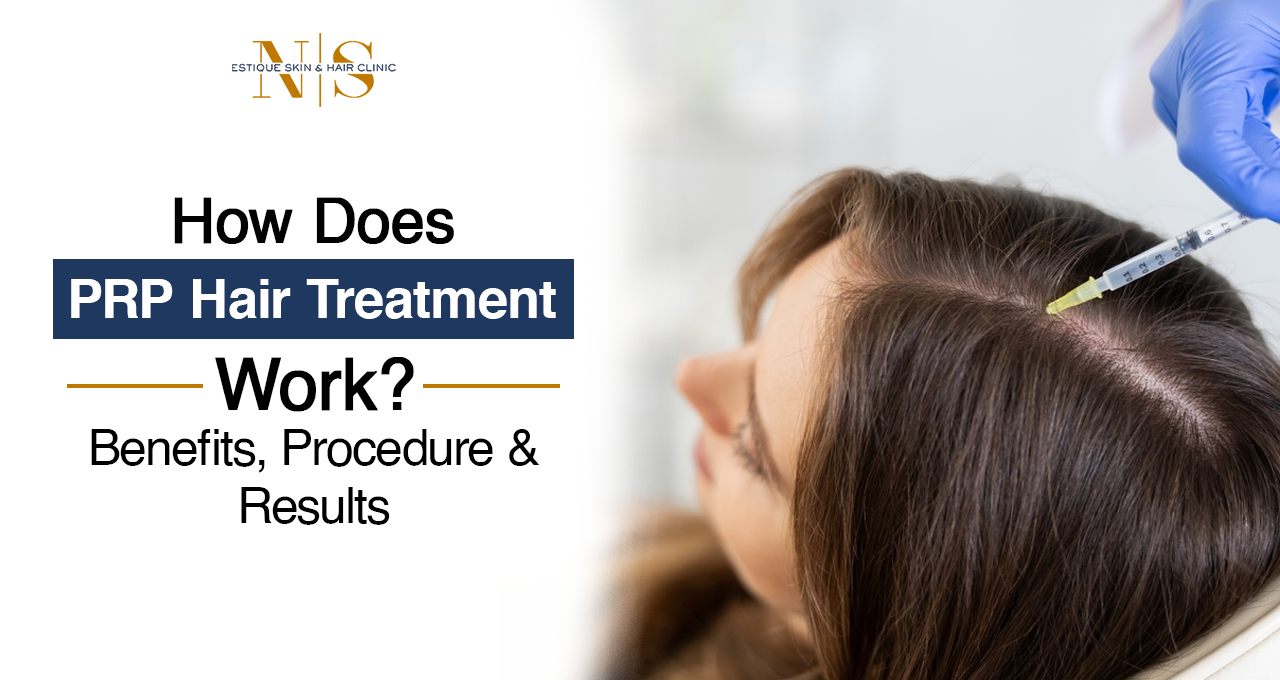
PRP hair treatment is one option used for certain types of hair loss, particularly androgenetic alopecia, or pattern hair loss. It uses a concentrated part of the patient’s own blood and is injected into areas of the scalp where thinning is present.
In this guide, we explain how PRP works, how the procedure is performed, its possible benefits, and what results you can realistically expect.
PRP stands for platelet-rich plasma. Plasma is the liquid part of blood. Platelets are small blood components that normally help with clotting and tissue repair.
To prepare PRP, a small amount of your own blood is collected and processed to separate plasma with a higher concentration of platelets. This platelet-rich portion is then injected into selected areas of the scalp.
Because the material comes from the patient’s own blood, PRP is described as an autologous treatment. Autologous simply means that the substance used for treatment comes from the same person receiving it.
Platelets contain proteins known as growth factors. These are signalling molecules that help cells communicate during tissue repair and regeneration. When PRP is injected into the scalp, these growth factors are released around the hair follicles. They may support processes involved in:
One of these processes is angiogenesis, which means the formation of new small blood vessels. Better blood vessel support around a follicle may help maintain the local environment needed for hair growth.
Clinical research suggests that PRP may improve hair density in people with androgenetic alopecia, although studies use different preparation methods and treatment protocols. This variation makes it difficult to predict the same response for every patient.
You may wonder what happens during PRP hair therapy. The process for this is mentioned as a few main steps:
A small blood sample is taken from a vein, similar to a routine blood test.
The blood is placed in a centrifuge, a machine that spins the sample at high speed. Spinning separates the different components of blood according to their density. This allows the platelet-rich portion of the plasma to be collected.
The required portion of platelet-rich plasma is separated for treatment. PRP preparation methods can differ between systems. Platelet concentration and other components of the final preparation may therefore vary.
Small amounts of PRP are injected into areas affected by hair thinning. The injections are placed across the treatment area rather than into only one point. The procedure may cause temporary discomfort because several small injections are required.
The main aim of PRP hair regrowth treatment is to support existing hair follicles rather than create completely new follicles. Possible PRP hair treatment benefits include:
Hair density refers to the number of hairs present within a specific area of the scalp. Several studies have found an increase in hair density after PRP treatment in people with androgenetic alopecia. However, the quality of evidence varies between studies.
PRP may help improve the activity of weakened but still functioning hair follicles. This makes early or moderate thinning different from an area where follicles have already been permanently lost.
Some patients may notice improvement in the appearance or thickness of existing hair. Research on hair diameter is less consistent than the evidence for hair density, so improvement cannot be guaranteed in every patient.
PRP is prepared from the patient’s own blood rather than using donor material. This reduces concerns related to rejection of the injected plasma itself.
PRP is most commonly studied for androgenetic alopecia. Androgenetic alopecia is the medical term for male or female pattern hair loss. It develops when genetically sensitive hair follicles gradually become smaller, producing finer and shorter hairs over time. PRP may be considered when follicles are still present, but hair density has started to decrease.
It may not be suitable for every type of hair loss. Hair shedding can also occur because of nutritional deficiencies, thyroid disorders, hormonal changes, illness, medicines, or scarring scalp conditions.
There is no single PRP schedule that applies to every patient. Many clinical studies have used a series of treatments separated by several weeks, but preparation methods and treatment schedules vary considerably. The number of sessions may depend on:
Maintenance sessions may also be considered in selected patients.
Hair growth is slow, so the effect of PRP cannot be judged immediately after the injections. Hair follicles move through different stages of the hair-growth cycle. The active growth phase is called the anagen phase, during which a hair follicle actively produces a hair shaft.
PRP should therefore not be presented as a guaranteed or instant hair-regrowth treatment.
Most side effects are related to the injections and are temporary. They may include:
Infection is uncommon when the procedure is performed using proper sterile technique.
Patients with certain blood disorders, platelet problems, active scalp infections, or medical conditions may need further assessment before treatment.
If you are considering PRP hair treatment in Gurgaon, the first step should be identifying why the hair is thinning. At Estique Clinic, PRP is included among the available hair and scalp treatments.
Dr Neha Sharma can assess the scalp, pattern of hair loss, medical history, and other possible causes before deciding whether PRP is appropriate.
Research suggests that PRP hair treatment may improve hair density in some people with androgenetic alopecia, but results vary between patients.
Possible benefits include improved hair density and support for existing thinning hair follicles.
Multiple small injections are given into the scalp, so mild discomfort can occur. Tenderness may also remain for a short period after treatment.
PRP does not permanently remove the underlying cause of pattern hair loss. Results may require continued medical management or maintenance treatment.
It may be considered for selected patients with thinning hair and active follicles. A dermatologist should first determine the type and cause of hair loss.





Experience Exceptional Skin Care From Our Best Skin Doctor In Gurgaon
Clinic Timings
Monday to Friday : 10 AM to 7 PM
Saturday : 10 AM till 6:30 PM
12, first floor, Palm Springs Plaza, Golf Course Rd, DLF Phase 5, Sector 54, Gurugram, Haryana 122003
1021/1022, Behind 32nd Avenue, Sector 15 part 2, Gurugram, Haryana 122001
Medical and Cosmetic Dermatologist and well renowned as the Best Dermatologist in Gurgaon, has formerly practised in prestigious Hospitals such as VMMC & Safdarjung Hospital (New Delhi) and All India Institute of Medical Sciences (AIIMS, New Delhi).
It just takes a few minutes to book a visit online.
We at Estique clinic believe in understanding your problems and then suggest the treatment for best results.
Copyright 2017-2026© Estique Skin And Hair Clinic. Privacy Policy