
×
 October 13, 2026
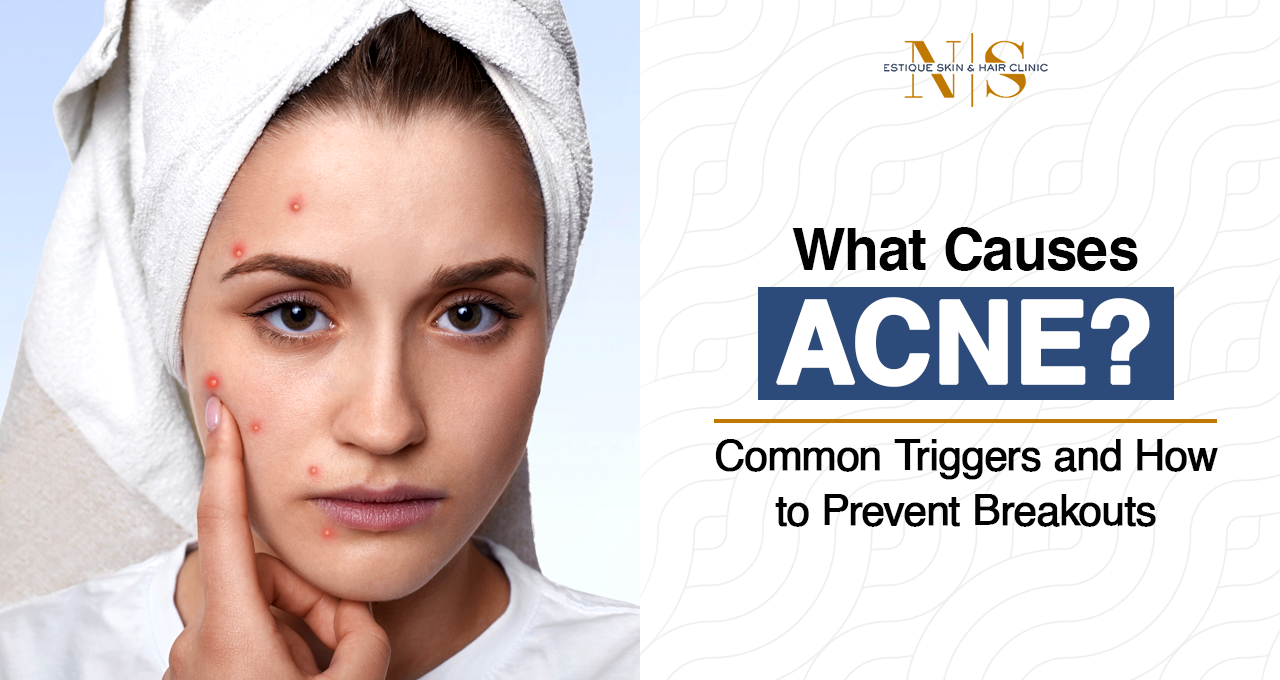
Acne can start with a few blackheads or whiteheads and then develop into repeated red, painful, or pus-filled breakouts. For some people, it mainly affects the face. For others, it can also appear on the back, chest, or shoulders.
Breakouts are not always caused by poor hygiene. Acne develops because of changes inside the hair follicle and oil gland, and several factors can make it worse.
At Estique Clinic, acne is treated as a medical skin condition, with treatment planned according to the type and severity of the breakout.
Acne vulgaris is the medical term for common acne. It develops in the pilosebaceous unit, which is the part of the skin made up of a hair follicle and its attached oil gland.
Acne may appear as:
Different types of acne can occur at the same time, which means a person may have blackheads, whiteheads, red pimples, and deeper inflamed lesions in the same area.
There is usually no single answer to what causes acne. Several changes happen together inside the skin.
The skin contains sebaceous glands that produce an oily substance called sebum.
Sebum normally helps protect and lubricate the skin. But when too much is produced, it can mix with dead skin cells and contribute to blocked pores. Oil production often increases during puberty because of hormonal changes.
Skin cells are constantly being shed. In acne-prone skin, dead cells can collect inside the hair follicle instead of shedding normally. They mix with sebum and form a plug. This process is called follicular hyperkeratinisation.
In simple terms, it means too many skin cells build up inside the pore. A closed blockage can form a whitehead, while an open blockage can form a blackhead.
Cutibacterium acnes, or C. acnes, is a bacterium that normally lives on the skin. When a follicle becomes blocked with oil and dead skin cells, conditions inside it can support increased bacterial activity.
This can contribute to inflammation and the development of red or pus-filled acne lesions.
Inflammation is an important part of acne. The immune system responds to changes inside the blocked follicle. This can cause redness, swelling, tenderness, and pain.
When inflammation occurs deeper in the skin, larger nodules or cysts may form. These deeper lesions have a higher risk of leaving acne scars.
The main causes of acne happen inside the follicle, but several factors can trigger or worsen breakouts.
Hormones are one of the most common acne triggers. Androgens are hormones that can increase the activity of sebaceous glands and increase oil production. This is why acne commonly develops during puberty.
Hormonal changes related to menstrual cycles, polycystic ovary syndrome, pregnancy, or other endocrine conditions may also affect acne in some people.
A hormonal acne trigger is any hormonal change that increases oil production or affects how the follicle behaves. Hormonal acne may sometimes appear more often around the lower face, jawline, or chin, although the location alone cannot confirm that acne is hormonal.
If breakouts are persistent, irregular, or associated with other hormonal symptoms, medical assessment may be needed.
Stress does not directly create acne in everyone, but it may worsen existing breakouts. Stress hormones can affect inflammation and oil gland activity. Stress may also change sleep, diet, and skincare habits, which can indirectly affect the skin.
Some skincare, makeup, sunscreen, or hair products can block pores. Products described as comedogenic have a greater tendency to clog pores in acne-prone skin. Choosing non-comedogenic products may help reduce this problem.
Repeated rubbing, sweating, tight clothing, helmets, masks, or sports equipment can irritate acne-prone skin. This type of breakout is sometimes called acne mechanica. It develops when friction, pressure, heat, and sweat repeatedly affect the same area.
Diet may influence acne in some people. Research has suggested a possible association between acne and high-glycaemic diets. These include foods that cause a rapid rise in blood sugar.
Some studies have also examined dairy intake, but diet does not affect everyone in the same way.
Some medicines can trigger acne-like eruptions or make existing acne worse. If acne begins soon after starting a new medicine, speak to your doctor before stopping it.
Acne cannot always be prevented completely, especially when hormones or genetics are involved. However, daily care can help reduce some triggers.
Wash acne-prone skin with a gentle cleanser. Avoid scrubbing, rough cleansing brushes, or repeatedly washing the face throughout the day.
Use skincare, makeup, moisturisers, and sunscreens labelled non-comedogenic when possible. These products are designed to be less likely to block pores.
Squeezing or picking acne can push inflammation deeper into the skin. It can also increase the risk of dark marks and permanent scarring.
Oily hair products can sometimes contribute to breakouts around the forehead and hairline. Keep the area clean and avoid letting heavy hair products remain on acne-prone skin.
Repeated inflammatory acne should not be left untreated for long periods. Early treatment can help control active breakouts and may reduce the risk of pigmentation and scarring.
Acne treatment in Gurgaon should be selected according to the type and severity of acne. A dermatologist may use one or more treatments.
Retinoids are vitamin A-derived medicines that help prevent dead skin cells from building up inside follicles. They are commonly used for blackheads, whiteheads, and inflammatory acne.
Benzoyl peroxide reduces acne-causing bacteria and inflammation. It can also help reduce the risk of bacterial resistance when used with certain antibiotics.
Azelaic acid can help reduce acne and inflammation. It may also help with some dark marks left after acne.
Topical or oral antibiotics may be used for selected inflammatory acne. They are usually prescribed for limited periods and often combined with other acne medicines.
Some women with hormonally influenced acne may benefit from specific hormonal medicines after proper medical assessment.
Isotretinoin is an oral retinoid used for selected cases of severe, persistent, or scarring acne. It requires medical supervision because it can cause important side effects and needs careful monitoring.
If you are looking for acne treatment near me, the first step should be identifying the type of acne and its possible triggers.
At Estique Clinic, acne and acne scars are included among the clinic’s dermatology concerns. A consultation with the skin doctor in Gurgaon can help determine whether topical medicines, oral treatment, or a combination approach is more suitable.
Choosing a skin clinic with dermatologist-led care is especially important when acne is persistent, painful, or starting to leave scars.
The main acne conditions include excess oil production, blocked hair follicles, bacterial activity, and inflammation.
Sudden acne may be linked with hormonal changes, new skincare products, certain medicines, stress, or increased friction and sweating.
Changes in androgen activity, menstrual cycles, or some hormonal conditions can act as a hormonal acne trigger in susceptible people.
Not always. Acne vulgaris can be influenced by hormones and genetics, but proper skincare and early treatment can help reduce breakouts.
Consider acne treatment in Gurgaon if breakouts are persistent, painful, deep, leaving scars, or not improving with basic skincare.




Experience Exceptional Skin Care From Our Best Skin Doctor In Gurgaon
Clinic Timings
Monday to Friday : 10 AM to 7 PM
Saturday : 10 AM till 6:30 PM
12, first floor, Palm Springs Plaza, Golf Course Rd, DLF Phase 5, Sector 54, Gurugram, Haryana 122003
1021/1022, Behind 32nd Avenue, Sector 15 part 2, Gurugram, Haryana 122001
Medical and Cosmetic Dermatologist and well renowned as the Best Dermatologist in Gurgaon, has formerly practised in prestigious Hospitals such as VMMC & Safdarjung Hospital (New Delhi) and All India Institute of Medical Sciences (AIIMS, New Delhi).
It just takes a few minutes to book a visit online.
We at Estique clinic believe in understanding your problems and then suggest the treatment for best results.
Copyright 2017-2026© Estique Skin And Hair Clinic. Privacy Policy