
×
 September 29, 2026
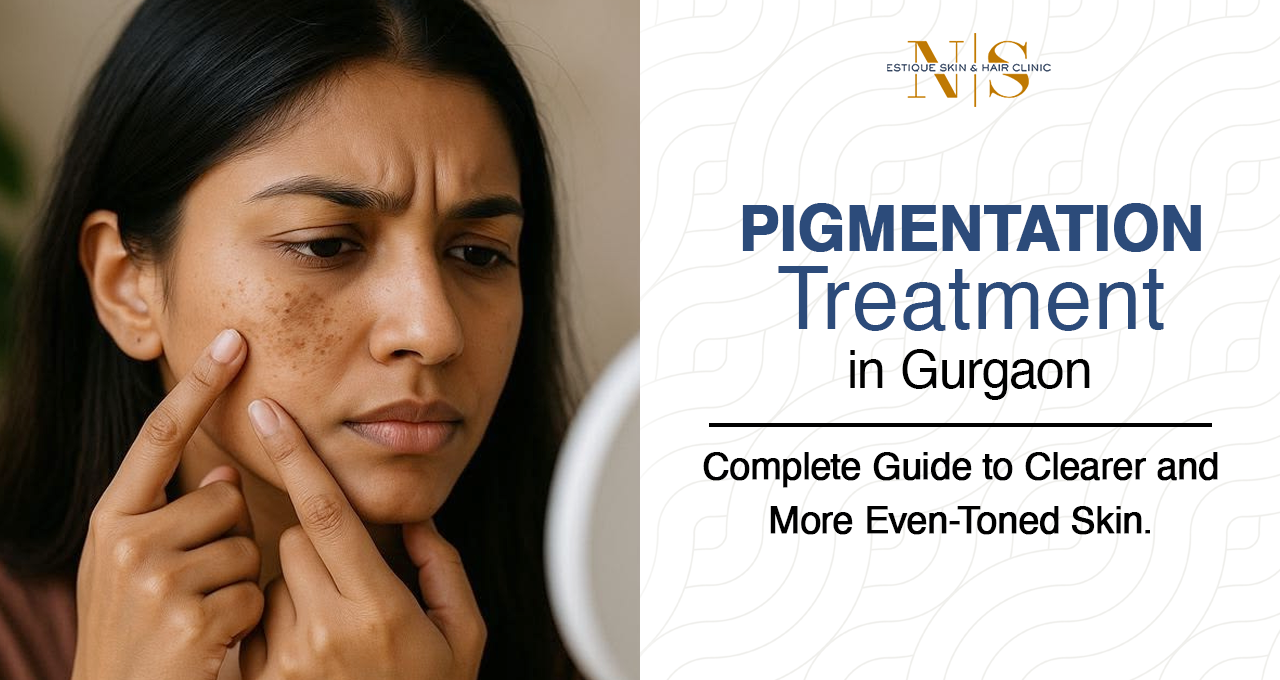
Pigmentation happens when some areas of the skin become darker than the surrounding skin. This may appear as brown patches, acne marks, freckles, sun spots, or uneven pigmentation.
If you are looking for the best treatment, the right pigmentation treatment in Gurgaon depends on what is causing the darkening, how deep the pigment is, and your skin type.
At Estique Skin & Hair Clinic in Gurgaon, treatment starts with a dermatologist checking the skin. This helps identify the type of pigmentation before creams, medical peels, laser toning, or other procedures are considered.
That is why choosing the Best skin doctor in Gurgaon should involve more than checking reviews or the number of procedures a clinic offers. Medical training, diagnosis, examination, treatment planning, and follow-up matter more.
Skin pigmentation is the colour created by melanin. It is a natural pigment made by cells called melanocytes. When too much melanin collects in one area, that part of the skin can become darker. These cells are switched on by the sun, heat, hormones, and inflammation. That is why so many different things can leave a dark patch behind.
Hyperpigmentation is a general term for this extra colour. It can include melasma, dark marks left by acne or irritation, freckles, and spots caused by sun exposure. Each type can behave differently. This is why skin pigmentation treatment in Gurgaon should be based on the type of pigmentation rather than the colour of the spot alone.
Facial pigmentation can develop for many reasons. Some of the reasons are listed below:
Since the cause can vary, the same face pigmentation treatment may not be right for every person.
Melasma is a hormone-related type of pigmentation. It often appears as brown or grey-brown patches. It commonly affects the cheeks, forehead, nose, or upper lip. It may improve with treatment but can return.
Pregnancy and hormonal contraceptives are common triggers. Heat is a separate trigger from sunlight, so a hot kitchen or a long commute can set it off. Melasma is a long-term condition that is controlled, not cured.
Post-inflammatory hyperpigmentation develops after the skin has been inflamed or injured. Dark marks left after acne are one example. These marks can remain visible for longer in deeper skin tones.
A brown mark usually sits near the surface and fades over months. A grey or slate-coloured mark sits deeper and can stay for years.
Freckles and sun spots are often linked to sun exposure. Other skin conditions can also cause similar-looking patches. A dermatologist may need to examine the skin before deciding on an uneven pigmentation treatment.
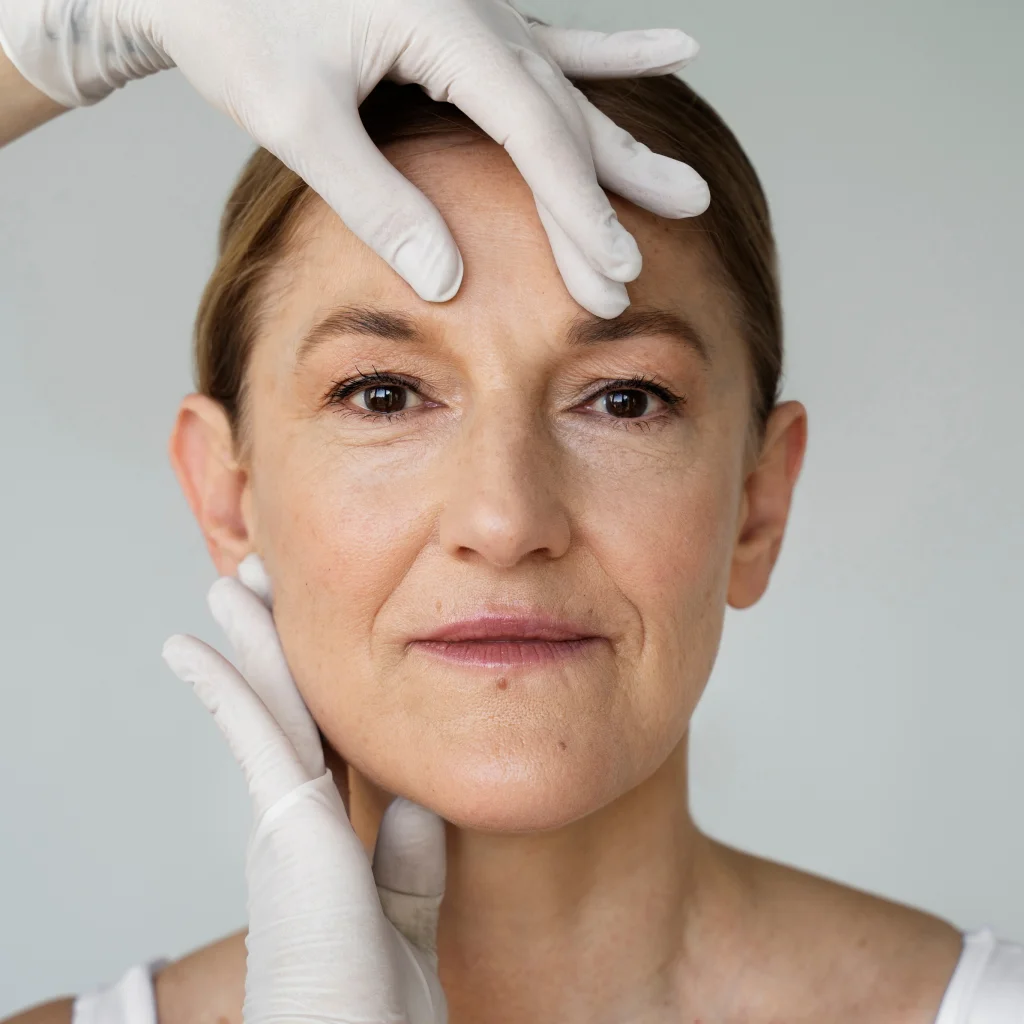
A dermatologist checks the colour, shape, location, and pattern of the pigmentation. They may also ask how long it has been present and whether it has changed. Your history can provide useful clues. This may include acne, skincare products, medicines, sun exposure, hormonal changes, and treatments you have already tried.
The dermatologist may also assess how deep the pigment sits in the skin. Surface pigmentation can respond differently from pigment found in deeper layers. Pigment near the surface looks brown with clear edges and responds better.
Deeper pigment looks grey or blue-brown with blurred edges and is far harder to shift. Many people have both at once sometimes. A Wood’s lamp or dermoscope is used to tell them apart.
A Wood’s lamp is a special ultraviolet light, and a dermoscope is a magnifying device that lets the doctor look into the skin. Estique Clinic follows a diagnosis-led approach. Treatment is planned according to the individual skin concern instead of using the same method for every patient.
Pigmentation may be treated with skincare, medicines, procedures, or a combination of these. The choice depends on the diagnosis and how the skin responds.
Sun protection helps stop existing pigmentation from becoming darker. It can also reduce one of the common triggers for new pigmentation. Broad-spectrum sunscreen, protective clothing, and staying in the shade may be advised.
Broad-spectrum means the sunscreen blocks both UVA and UVB rays. For melasma, tinted sunscreen containing iron oxides may also help protect the skin from visible light.
Use at least SPF 30, and reapply every few hours when you are out. UVA is the ray that passes through glass, so time near a window or in a car still counts. Sunscreen usually remains part of pigmentation care after visible improvement.
Some pigmentation can be treated with products applied directly to the skin. A dermatologist may use retinoids, azelaic acid, vitamin C, cysteamine, glycolic acid, kojic acid, or other pigment-controlling ingredients.
Hydroquinone helps reduce melanin production and may be used for selected pigmentation under dermatologist supervision.
Glycolic acid supports exfoliation and epidermal renewal, while kojic acid helps reduce tyrosinase activity, an enzyme involved in melanin production.
The right product depends on the skin condition and the person using it. Some ingredients can irritate when they are too strong or used incorrectly. Skin irritation can make certain types of pigmentation darker. Strong lightening creams should therefore be used according to medical advice.
Medical peels may help some types of surface pigmentation. They use carefully selected peeling agents to produce controlled exfoliation and support skin renewal. Glycolic acid, salicylic acid, and retinol peels are among the options that may be used for pigmentation concerns.
Retinol peels support epidermal cell turnover and may help improve selected forms of superficial pigmentation and uneven pigmentation. Medical peels are usually given as a course of sessions spaced a few weeks apart rather than as a one-time treatment.
The type and strength of the medical peel need careful selection according to the pigmentation pattern, skin type, and sensitivity. Estique clinic offers medical peels as part of its dermatologist-led treatment options.
Laser treatment may help selected pigmentation concerns. The laser used and its settings are chosen according to the type of pigmentation, its depth, and the patient’s skin characteristics.
Q-switched laser systems may be used for certain pigment problems. A Q-switched laser releases energy in very short pulses that target pigment within the skin.
In melasma and other pigmentation concerns, laser treatment may be included as part of a dermatologist-planned treatment approach. Laser toning is generally performed as a course of sessions using settings selected according to the pigmentation and skin type.
At Estique Clinic, Q-switched laser toning is available for selected pigmentation concerns after dermatologist assessment.
Mesotherapy may also be considered for selected pigmentation concerns. The procedure involves delivering small amounts of selected active ingredients into the superficial layers of the skin. The formulation and treatment plan are chosen according to the type of pigmentation, skin condition, and individual treatment goals.
Use sunscreen daily and keep the skin out of direct sun. Stop acids and retinoids for a few days, or until your dermatologist clears them. Do not scrub or rub the treated area. Follow the aftercare instructions given by your dermatologist.
Yes. Some forms of pigmentation can return after they improve. Melasma is one condition that may come back over time. Sun exposure, hormones, and skin inflammation can contribute to recurrence. How the person follows the maintenance regimen also contributes to the result he or she may get.
Melasma often needs continued care rather than being treated as a condition that disappears permanently after one procedure. For this reason, skin discoloration treatment may include long-term steps to keep the condition under control.
There is no single treatment timeline for pigmentation. Different types of pigment respond at different speeds. Dark marks left after acne may behave differently from long-standing melasma or pigment found deeper in the skin.
The time needed for improvement can depend on the depth of the pigment, the treatment being used, skin sensitivity, and sun exposure. Following the treatment plan regularly can also affect progress.
Estique Skin & Hair Clinic provides dermatologist-led care for pigmentation, melasma, freckles, dull skin, and uneven pigmentation. Available treatment options include Q-switched laser toning, medical peels, Mesotherapy, topical treatment, and other dermatologist-selected skin procedures.
The clinic is led by Dr Neha Sharma, an MD dermatologist with more than 15 years of clinical experience. She trained at VMMC and Safdarjung Hospital and completed additional aesthetic training in Singapore and Thailand.
If you are looking for the best skin and hair clinic in Gurgaon or the best dermatologist in Gurgaon, consider how the clinic reviews your skin and follows up on your progress.
Avoid using strong bleaching creams, steroid combinations, acids, or home peels without knowing whether they are suitable for your skin. It is advised not to pick acne or rub dark patches. Repeated irritation can affect pigmentation.
Changing several skincare products within a short period can also make it difficult to know which product is irritating the skin. If a product causes ongoing burning, stinging, redness, or peeling, stop using it and speak with your dermatologist.
See a dermatologist if dark spots are new, spreading, changing in appearance, or staying for a long time. A skin check can also help when you cannot tell whether the marks are melasma, freckles, sun spots, acne-related pigmentation, or another skin condition.
After examining the skin, the dermatologist can decide whether skincare changes, prescription treatment, a procedure, or another approach is needed.
Yes. A suitable dark spots treatment in Gurgaon may help marks left after acne. The first step is to identify whether the mark is extra pigment or another type of acne mark. This matters because different marks need different treatment.
Yes. Lasers used for pigmentation can be safely performed on Indian skin when the correct laser, settings, and treatment plan are selected according to the patient’s skin type and pigmentation. A dermatologist assesses the pigmentation before treatment and customises the laser parameters accordingly.
Yes, some mild pigmentation may improve with suitable skincare. The result depends on what is causing the uneven colour and where the pigment sits in the skin.
Follow the treatment plan given by your dermatologist rather than stopping products or procedures on your own. Some medicines may need to be reduced, changed, or stopped once the skin improves.
There is no fixed number. Medical peels and laser toning are planned as a course spaced a few weeks apart, and the count depends on the type of pigment and how your skin responds. Your dermatologist reviews the skin during the course and adjusts the plan.
Some pigment creams are not safe in pregnancy, so treatment is usually limited to sun protection and suitable options until after delivery. Tell your dermatologist if you are pregnant or breastfeeding before starting anything.
Sun spots and acne marks can improve significantly once the trigger is controlled. Melasma is different. It usually needs ongoing management and can return when triggers such as sun exposure, heat, or hormonal changes occur.




Experience Exceptional Skin Care From Our Best Skin Doctor In Gurgaon
Clinic Timings
Monday to Friday : 10 AM to 7 PM
Saturday : 10 AM till 6:30 PM
12, first floor, Palm Springs Plaza, Golf Course Rd, DLF Phase 5, Sector 54, Gurugram, Haryana 122003
1021/1022, Behind 32nd Avenue, Sector 15 part 2, Gurugram, Haryana 122001

Medical and Cosmetic Dermatologist and well renowned as the Best Dermatologist in Gurgaon, has formerly practised in prestigious Hospitals such as VMMC & Safdarjung Hospital (New Delhi) and All India Institute of Medical Sciences (AIIMS, New Delhi).
It just takes a few minutes to book a visit online.
We at Estique clinic believe in understanding your problems and then suggest the treatment for best results.
Copyright 2017-2026© Estique Skin And Hair Clinic. Privacy Policy