
×
 September 9, 2026
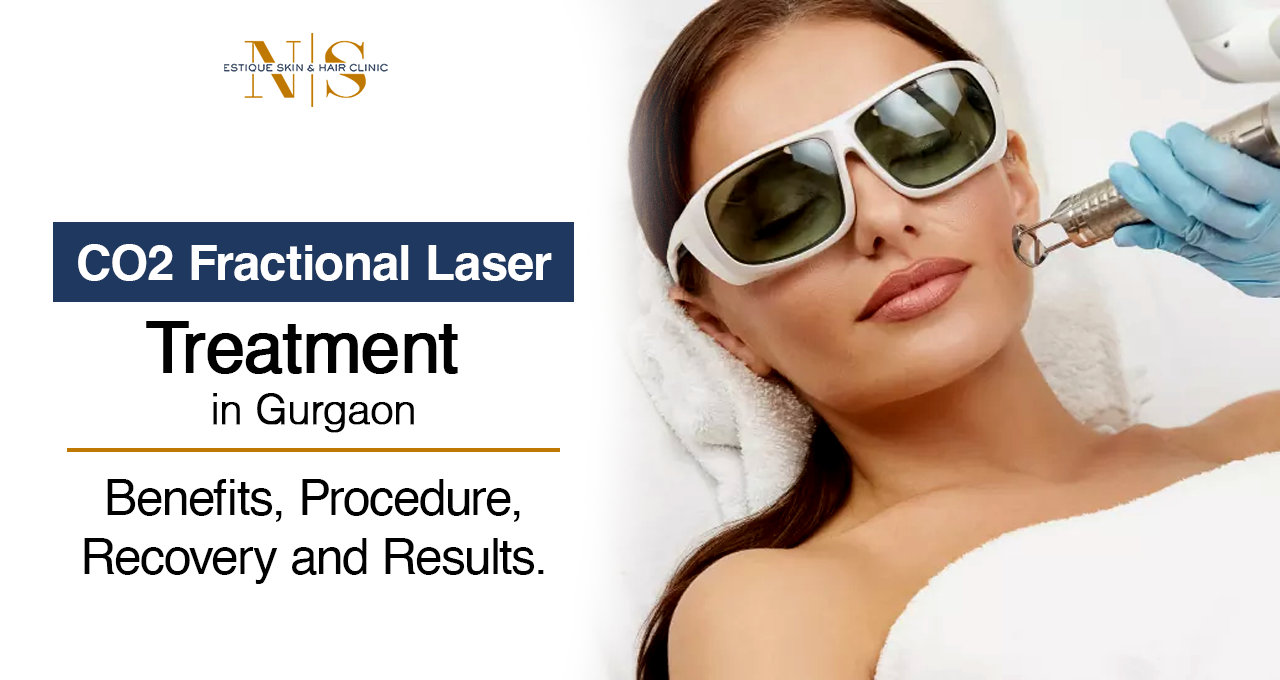
CO2 fractional laser is a skin resurfacing treatment. Resurfacing means the damaged top layer of skin is removed in a controlled way so newer skin can form in its place. It may help with acne scars, uneven skin texture, fine lines, stretch marks, and some other types of scars. The laser creates many tiny treatment points in the skin. The skin around these points stays untreated, which helps the area heal.
If you are considering CO2 fractional laser treatment in Gurgaon, a dermatologist should first examine your skin. Your skin type, scar type, and the depth of the concern help decide whether this treatment is suitable.
At Estique Skin & Hair Clinic, we use Fractional CO₂ Laser for selected scar and skin texture concerns. The treatment plan and laser settings are chosen after checking the skin.
CO2 fractional laser treatment is a type of ablative laser resurfacing. Ablative means the laser removes very small amounts of damaged skin in a controlled way. The CO2 laser uses light energy that is absorbed by water in the skin.
The skin contains water, so the beam is taken up exactly where it is aimed and does not spread far beyond it. It creates tiny columns of treatment instead of treating the full skin surface. Fractional means only a fraction of the skin surface is treated in one session.
The untreated skin between these columns helps the area heal. This untreated skin acts as a reservoir of healthy cells that repair the treated columns, which is why recovery is measured in days rather than weeks.
The treatment also starts the skin’s natural repair process and supports new collagen formation. Collagen is a protein that helps give skin its structure and support.
Fractional CO2 laser treatment may be used for different skin concerns. The right use depends on the type and depth of the problem.
For acne scars, the laser may be considered for atrophic scars. These are scars that sit lower than the nearby skin because some tissue has been lost. Not every acne scar responds in the same way. A dermatologist needs to check the scar type before planning treatment.
Boxcar scars are wide with sharp edges. Rolling scars leave a soft, uneven surface. Ice pick scars are narrow and run deep. Boxcar and rolling scars generally suit resurfacing better than ice pick scars, which often need a targeted procedure instead.
Raised scars behave differently from atrophic ones and are not treated the same way. A history of keloid scarring is assessed before resurfacing is planned.
For selected acne scars, Fractional CO₂ Laser may also be combined with Subcision. Subcision works below the skin to release fibrous bands that pull some depressed acne scars downward, while Fractional CO₂ Laser resurfaces the skin and supports collagen remodelling.
The main benefit of Fractional CO₂ Laser is controlled skin resurfacing. It may help improve selected scars and rough or uneven skin texture. The treatment also supports collagen remodelling.
This means collagen in the treated area slowly changes as the skin heals. Remodelling is the stage where the body replaces disorganised scar collagen with better organised tissue, and it continues for months after the session.
Because the laser treats small sections of skin, some surrounding skin remains untouched. This supports the healing process. Results can vary from person to person. Skin type, scar type, laser settings, and the number of sessions can all affect the result.
In selected patients, Growth Factor Concentrate (GFC) or autologous exosomes may also be used at the time of Fractional CO₂ Laser treatment. These regenerative treatments may support the skin’s repair response and collagen production and can be incorporated into a combination treatment plan to enhance the overall results.
The procedure starts with a skin assessment. The dermatologist checks the concern and chooses the laser settings based on the skin. Numbing cream is applied before the session and needs time to take effect.
Eye protection is worn throughout. During treatment, the laser creates many tiny controlled columns in the skin. These areas begin a repair process that includes collagen formation.
The depth and number of these treatment points can be adjusted. A shallow scar may not need the same settings as a deeper scar. Depth decides how far into the skin each column reaches.
Density decides how many columns are placed in a given area. Higher settings give stronger resurfacing and a longer recovery, which is why settings are matched to the skin rather than fixed. After treatment, the skin may feel warm or sensitive. Redness, swelling, and crusting can also happen while the skin heals.
Recovery usually takes several days because the laser creates controlled injury in the skin. At Estique, we advise about 5 to 7 days of downtime for this procedure. During recovery, the skin may look red and feel sensitive.
Swelling is usually most noticeable in the first two days. Peeling tends to follow as the crusting lifts on its own. Redness and sensitivity gradually settle as the skin heals over the next few days.
The exact healing time depends on how strong the treatment was and how your skin responds. Do not pick or remove peeling or crusted skin. Follow the aftercare instructions given by your dermatologist.
Keep the area clean and moisturised, and use sunscreen daily once your dermatologist allows it. Fresh skin pigments easily, so sun exposure is limited during recovery. Acids, retinoids and scrubs are stopped until cleared.
Results usually appear gradually as the skin heals and collagen changes over time. You may first notice changes in skin texture after the early healing period. Collagen remodelling continues below the skin surface after this stage. Because of this, the result is judged some weeks after a session rather than immediately after the skin has healed.
The amount of improvement also depends on the type of scar. Rolling scars and boxcar scars may respond differently from deep ice-pick scars. For this reason, some people with different scar types may need more than one kind of treatment.
For acne scars, Fractional CO₂ Laser may be combined with Subcision when both tethered scars and surface texture need to be addressed. Growth Factor Concentrate (GFC) or autologous exosomes may also be used alongside Fractional CO₂ Laser in selected treatment plans to support collagen production and tissue repair.
Fractional CO₂ Laser aims to improve the concern. It should not be expected to remove every scar, line, or mark completely.
The number of sessions depends on the concern being treated and the level of improvement being planned. Some people may need more than one session. Sessions are spaced weeks apart so the skin can complete one healing cycle before the next treatment.
For acne scars, the type and depth of the scars are important when planning treatment. The way your skin heals after each session also matters.
At Estique, we assess the skin before deciding how many sessions may be suitable. Acne scar treatment is planned according to factors such as scar depth, scar type, location, and the person’s skin characteristics.
Fractional CO₂ Laser can be used in selected Indian skin types, but the settings need to be chosen carefully. Darker skin tones may have a higher chance of post-inflammatory hyperpigmentation. This means the skin can become darker after irritation or inflammation.
Laser energy, treatment depth, treatment density, and skin type can affect this risk. A dermatologist should therefore examine the skin before treatment and choose settings that suit the individual skin type. Recent tanning or sunburn raises this risk, so treatment may be postponed until the skin settles.
Treatment is postponed during pregnancy, when there is an active skin infection or cold sore in the area, and where isotretinoin has been used recently. Tell your dermatologist about any bleeding disorder, blood-thinning medicine, or history of raised scarring before the procedure is planned.
Fractional CO2 laser cost can vary depending on the area being treated and the treatment plan. The cost may also differ if several sessions are needed or if a larger area has to be treated.
An exact cost is best discussed after the dermatologist examines the skin and decides what type of treatment is needed.
At Estique Clinic, we plan Fractional CO₂ Laser treatment according to the skin concern and the condition of the skin.
We offer Fractional CO₂ Laser for selected scar and texture concerns. We also provide other acne scar treatments, including MNRF. MNRF combines microneedling with radiofrequency energy. The needles carry energy below the surface, so the top layer of skin takes less impact than it does with ablative resurfacing.
For selected acne scars, Fractional CO₂ Laser may also be combined with Subcision. Growth Factor Concentrate (GFC) and autologous exosomes may be incorporated with Fractional CO₂ Laser in selected patients to support collagen production, skin repair, and overall treatment results.
Having different treatment options helps us choose an approach based on the scar type and depth instead of using a CO2 laser for every patient.
Our clinic is led by Dr. Neha Sharma, an MD dermatologist with more than 15 years of clinical experience. She trained at VMMC and Safdarjung Hospital. She has also completed additional training in lasers and dermatosurgery in Singapore and cosmetic dermatology in Thailand.
If you are searching for Fractional CO2 Laser Treatment near me, look for a clinic that begins with a proper skin and scar assessment. A personalized treatment plan should be based on your skin condition, scar type, and individual needs.
Yes. Some acne scars may need more than one type of treatment because different scar types have different structures. Fractional CO₂ Laser can be combined with Subcision for selected depressed or tethered acne scars. Growth Factor Concentrate (GFC) or autologous exosomes may also be used at the time of Fractional CO₂ Laser treatment to support collagen production and enhance the treatment response. A dermatologist decides the combination after examining the type and depth of the scars.
Active acne should be checked before scar resurfacing is started. Treating active acne and treating old acne scars are different parts of acne care. The dermatologist may first control ongoing breakouts before beginning treatment for existing scars.
Fractional CO₂ Laser works by creating controlled treatment columns in the skin. This starts a healing process and supports collagen remodelling. The outer skin goes through a short recovery period after the procedure.
Restart your regular skincare according to your dermatologist’s advice. The skin barrier is healing after Fractional CO₂ Laser. Products that were comfortable before treatment may irritate the skin during early recovery.
Numbing cream is applied beforehand, so most patients report heat and a prickling sensation rather than sharp pain. The treated area can feel like sunburn for several hours afterwards.
Yes. Stretch marks and injury scars are treated on the body as well as the face. Skin on the body heals more slowly than facial skin, so settings and session spacing are adjusted for the area being treated.





Experience Exceptional Skin Care From Our Best Skin Doctor In Gurgaon
Clinic Timings
Monday to Friday : 10 AM to 7 PM
Saturday : 10 AM till 6:30 PM
12, first floor, Palm Springs Plaza, Golf Course Rd, DLF Phase 5, Sector 54, Gurugram, Haryana 122003
1021/1022, Behind 32nd Avenue, Sector 15 part 2, Gurugram, Haryana 122001

Medical and Cosmetic Dermatologist and well renowned as the Best Dermatologist in Gurgaon, has formerly practised in prestigious Hospitals such as VMMC & Safdarjung Hospital (New Delhi) and All India Institute of Medical Sciences (AIIMS, New Delhi).
It just takes a few minutes to book a visit online.
We at Estique clinic believe in understanding your problems and then suggest the treatment for best results.
Copyright 2017-2026© Estique Skin And Hair Clinic. Privacy Policy