
×
 September 17, 2024
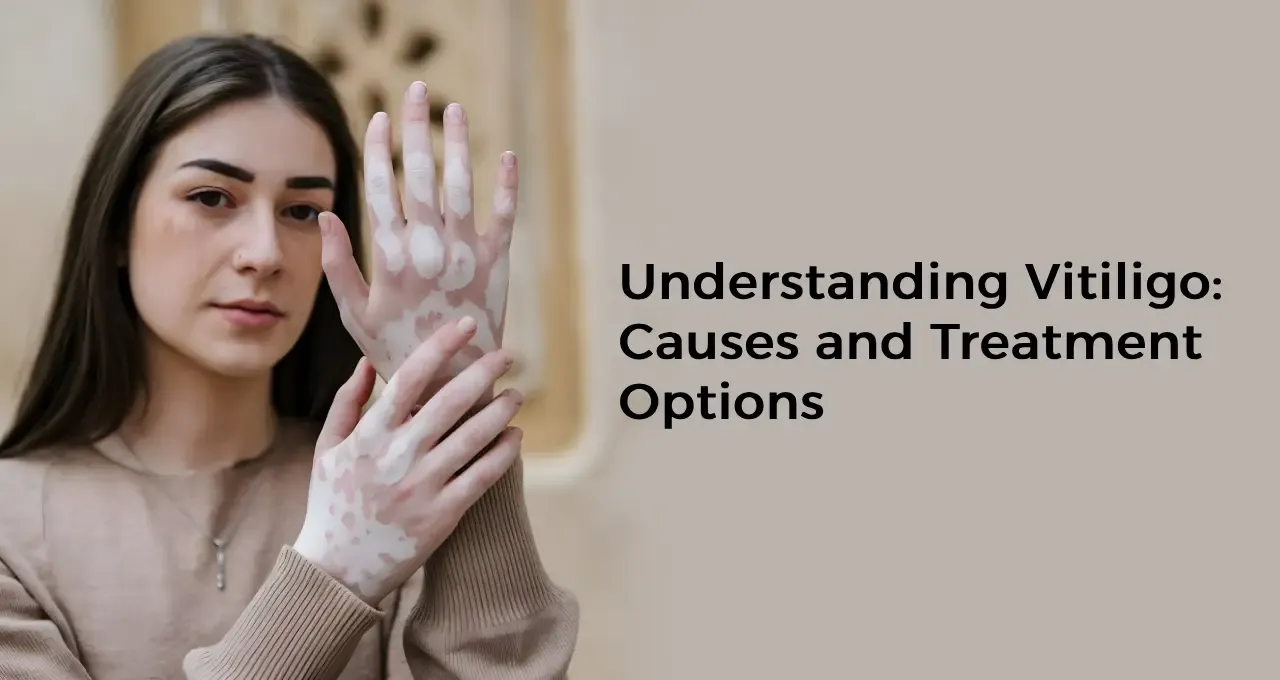
Vitiligo is a skin disease in which skin loses its colour in patches or spots. These patches appear to be lighter or pale in colour than the rest of the skin tone. This condition mostly affects the face, hands and neck. However, as the disease progresses, it can affect other body parts, including hair, turning it into white or silver.
In addition to that, vitiligo disease can affect anyone regardless of age, gender, or skin tone. It is often more noticeable in individuals with black or darker skin tones. Although the condition is not fatal or life-threatening, it often causes social stigma and lowers confidence.
The common vitiligo symptoms and signs are as follows:
Vitiligo is an autoimmune chronic disease caused when immune cells start attacking melanocyte cells. However, the probable vitiligo causes are as follows:
Vitiligo disease affect less than 1% of the total population. The condition affects individuals regardless of their age, se-x, race, etc. Some of the common medical conditions associated with autoimmune disease and more likely to develop vitiligo are individuals with the following conditions:
Vitiligo can be categorised based on the affected body area or pattern of spreading. These types are as follows:
Focal Vitiligo: It is a rare type of vitiligo in which macules develop in a small area. This type of vitiligo does not often spread until 1 or 2 years.
Generalized Vitiligo: Most common type of vitiligo. The patches tend to appear on various parts of your body.
Segmental Vitiligo: The condition affects only one segment of the body. It will affect either the right or left side of the hand, arms, or face.
Mucosal Vitiligo: The condition affects body parts with mucous membranes like the mouth or genitals.
Trichrome Vitiligo: It resembles a bullseye. The patch tends to have a white or colourless centre, then an area of lighter pigmentation, and an area of your natural skin tone.
Universal Vitiligo: Most rare type of vitiligo in which skin loses more than 80% of its pigmentation.
Vitiligo treatment in Gurgaon may allow skin to regain its normal color. Some of the effective and best treatments for vitiligo are as follows:
Vitiligo laser treatment is performed using Excimer laser. It is one of the most effective non-invasive and signature treatments offered at Estique Skin and Hair Clinic for vitiligo management. The procedure uses UVB light (308 nm) to stimulate melanocyte activity and promote pigment production in the vitiligo-affected area. The procedure is very precise and does not harm the surrounding skin. It is the best choice for managing localized patches. One can see noticeable results in just a few sessions as it reduces depigmentation safely and effectively.
Medications
In this treatment procedure, the natural colour of your skin is removed to match the vitiligo-affected area. The treatment uses a drug which is applied to a pigmented area.
Some patients report experiencing mild headaches after Blood-derived Growth Factors hair treatment. This may be due to the injections themselves or the slight pressure applied to the scalp during the procedure. Headaches are generally mild and resolve within a few hours to a day.
While this therapy is unlikely to cause an allergic reaction since it uses the patient’s own blood, there is a small risk of an allergic reaction to any additives used during the preparation of the material to be injected. It’s important to discuss any known allergies with the provider before undergoing treatment.
In some cases, patients may experience temporary hair shedding following the therapy. This is known as “shock loss” and occurs when the hair follicles enter a resting phase before beginning a new growth cycle. While this can be alarming, it is usually temporary, and hair growth typically resumes within a few weeks.
While the side effects of Blood-derived Growth Factors hair treatment are generally mild and temporary, there are several steps patients can take to minimize their risks:
Blood-derived Growth Factors therapy for hair loss is considered safe when performed by qualified professionals. The long-term effectiveness of Blood-derived Growth Factors therapy varies depending on factors such as the patient’s age, the extent of hair loss, and the underlying cause of the hair loss. Some patients may require multiple sessions to achieve and maintain optimal results.
While Blood-derived Growth Factors therapy can be an effective treatment for hair loss, it is not a guaranteed cure, and results can vary from person to person. Patients should have realistic expectations and understand that Blood-derived Growth Factors therapy may need to be combined with other treatments, such as topical or oral medications, for the best outcomes.
Blood-derived Growth Factors hair treatment is a promising option for individuals seeking a minimally invasive solution for hair loss. While the procedure is generally safe and well-tolerated, it’s important to be aware of the potential side effects, which are typically mild and temporary. Choosing a reputable provider for Blood-derived Growth Factors Therapy in Gurgaon, such as a well-established Skin Clinic in Gurgaon, can help minimize the risk of side effects and ensure a positive experience.




Experience Exceptional Skin Care From Our Best Skin Doctor In Gurgaon
Clinic Timings
Monday to Friday : 10 AM to 7 PM
Saturday : 10 AM till 6:30 PM
12, first floor, Palm Springs Plaza, Golf Course Rd, DLF Phase 5, Sector 54, Gurugram, Haryana 122003
1021/1022, Behind 32nd Avenue, Sector 15 part 2, Gurugram, Haryana 122001
Medical and Cosmetic Dermatologist and well renowned as the Best Dermatologist in Gurgaon, has formerly practised in prestigious Hospitals such as VMMC & Safdarjung Hospital (New Delhi) and All India Institute of Medical Sciences (AIIMS, New Delhi).
It just takes a few minutes to book a visit online.
We at Estique clinic believe in understanding your problems and then suggest the treatment for best results.
Copyright 2017-2026© Estique Skin And Hair Clinic. Privacy Policy